
Call us now :08045477641
 Send Inquiry
 Send Inquiry
Tomato Ketchup Plant
Price 445200 INR/ Piece
MOQ : 1 Piece
Tomato Ketchup Plant Specification
- Machine Type
- Automatic Tomato Sauce Plant
- Features
- Energy efficient, easy operation and cleaning
- Heating Method
- Steam/Indirect Electric
- Feeding System
- Automatic Conveyor
- Operating Temperature
- Up to 130C
- Power Source
- Electric
- Phase
- Three Phase
- Function Type
- Continuous processing
- Automation Grade
- Fully Automatic
- Frequency
- 50 Hz
- Noise Level
- 75 dB
- Speed Mode
- Variable frequency drive (VFD)
- Product Type
- Tomato Ketchup Processing Line
- General Use
- Industrial Ketchup Manufacturing
- Material
- SS316/SS304 Stainless Steel
- Type
- Batch & Continuous
- Capacity
- 500-3000 kg/hr
- Weight (kg)
- 3600 kg
- Product Shape
- Rectangular modular type
- Computerized
- Yes
- Automatic
- Yes
- Control System
- PLC based Control Panel
- Installation Type
- Complete Turnkey
- Voltage
- 380V
- Power
- 45 kW
- Dimension (L*W*H)
- 5500mm 2200mm 3000mm
- Raw Material
- Stainless steel and food-grade polymers
- Feature
- Efficient tomato processing
- Color
- Silver/Grey
- Production Application
- Ketchup, Puree, Paste, Sauce Processing
- Boiling Vessel Material
- AISI 304/316 Stainless Steel
- Water Consumption
- Minimum as per design
- Safety System
- Overheat & Overcurrent Protection
- Output Consistency
- Fine Homogeneous Paste
- Discharge Type
- Automated Spout
- Mixing Speed
- Adjustable
- Chopping Mechanism
- High-Efficiency Cutter Head
- Cleaning System
- CIP (Clean-In-Place)
- Ambient Working Conditions
- 5°C to 50°C
- Conveyor Type
- Belt/Inclined Conveyor for Sorting
Tomato Ketchup Plant Trade Information
- Minimum Order Quantity
- 1 Piece
- Supply Ability
- 1 Piece Per Week
- Delivery Time
- 1 Week
- Main Domestic Market
- All India
About Tomato Ketchup Plant
A Tomato Ketchup Plant is a manufacturing facility that produces tomato ketchup in large quantities. The plant typically includes several units and machinery that work together to process, mix, and package the ketchup.
Here are some of the key features and components that are typically found in a Tomato Ketchup Plant:
- Tomato receiving and washing.
- Sorting and grading.
- Preheating and pulping.
- Mixing and blending.
- Cooking and refining.
- Filling and packaging.
Some of the key features of a Tomato Ketchup Plant include:
- Automated machinery.
- Quality control.
- Sanitation.
- Energy efficiency.
Advanced Automation for Consistent Production
Equipped with a fully automated PLC-based control panel, the Tomato Ketchup Plant ensures precision in batch and continuous processes. Automatic conveyors, adjustable mixing speeds, and computerized control optimize efficiency and consistency across ketchup, puree, paste, and sauce processing. The modular design enables easy integration into food manufacturing lines.
Superior Hygiene and Materials
Constructed from SS316/SS304 stainless steel and food-grade polymers, the plant prioritizes hygiene and durability for all processing stages. The integrated CIP (Clean-in-Place) system streamlines maintenance and guarantees sanitary conditions, which meet the strict requirements of food safety standards.
Flexible Capacity and Energy Efficiency
With capacity options from 500 to 3000 kg/hr, the system adapts to various production needs. Engineered for energy efficiency and minimal water usage, the plant operates quietly and safely, thanks to VFD motors, overheat and overcurrent protections, and advanced steam or electric heating methods.
FAQs of Tomato Ketchup Plant:
Q: How does the Tomato Ketchup Plant ensure hygienic processing during ketchup and sauce production?
A: The plant is manufactured using SS316/SS304 stainless steel and food-grade polymers to maintain cleanliness. An integrated CIP (Clean-In-Place) system automates the cleaning process, ensuring all internal surfaces are thoroughly sanitized without manual intervention.Q: What types of tomato products can be produced with this plant?
A: This plant can produce a wide range of products including tomato ketchup, puree, paste, and sauces, thanks to its high-efficiency cutter, adjustable mixing speeds, and continuous or batch processing capabilities.Q: When should I consider using a turnkey tomato processing solution like this one?
A: A turnkey solution is ideal when you want seamless installation, integration, and rapid startup for ketchup and sauce production. It is particularly suitable for industrial food processors seeking high efficiency, minimal downtime, and scalable capacity.Q: Where can the Tomato Ketchup Plant be installed and operated?
A: Designed for flexibility, the plant can be installed in a variety of industrial settings. Its robust components and temperature tolerance (5C to 50C working conditions) make it suitable for different regional environments across India and globally.Q: What is the process followed for tomato ketchup and sauce production in this plant?
A: Tomatoes are washed and sorted automatically, chopped using a high-efficiency cutter, then transferred through belt conveyors. The mixture is heated (via steam or indirect electric methods), mixed, and pasteurized, leading to the final fine, homogeneous paste. The system automates feeding, processing, and discharge.Q: How easy is it to operate and maintain the plant?
A: The machine features a PLC-based control panel, variable speed drives, and automatic operation for easy use. The CIP cleaning system reduces manual cleaning time, while the modular design and stainless-steel construction facilitate straightforward maintenance.Q: What are the main benefits of using this automatic tomato processing plant?
A: Key benefits include energy-efficient operation, minimal water consumption, reliable product consistency, advanced safety systems, and ease of operation and cleaning. These features help increase productivity while lowering operational costs.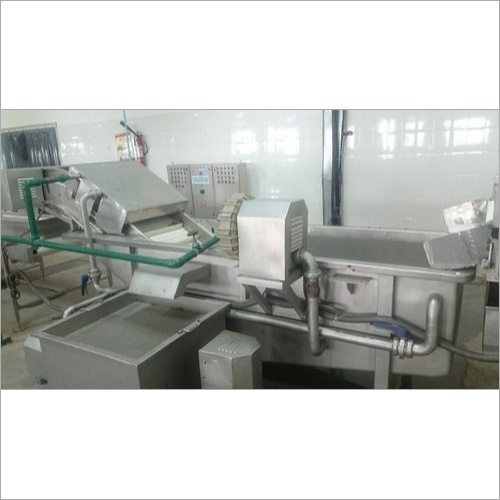
Tell us about your requirement

Price:
Quantity
Select Unit
- 50
- 100
- 200
- 250
- 500
- 1000+
Additional detail
Mobile number
Email

More Products in Tomato Processing Plant Category
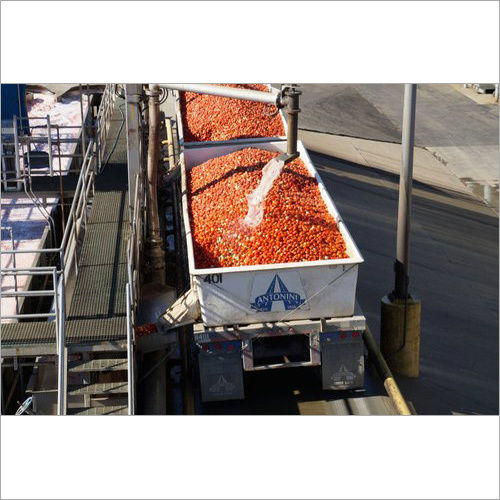
Tomato Puree Processing Plant
Price 5000000 INR / Piece
Minimum Order Quantity : 1 Piece
Color : Other, Stainless Steel Finish (Silver/Grey)
General Use : Processing Tomato Puree from fresh tomatoes
Capacity : 0.5 TPH to 5 TPH (Tons Per Hour)
Voltage : 380440 V
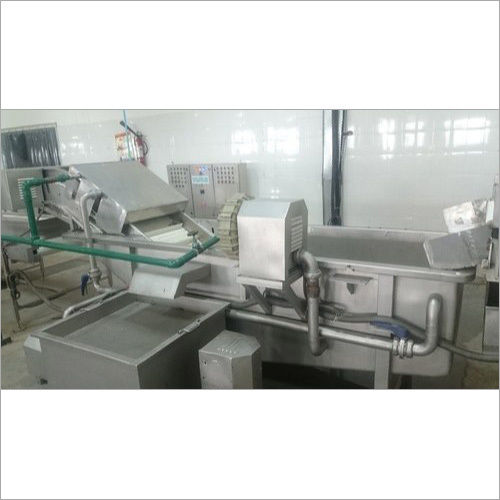
Tomato Processing Plant
Price 445200 INR / Unit
Minimum Order Quantity : 1 Piece
Color : Other, Silver
General Use : Tomato Pulp and Paste Production
Capacity : 2 to 20 Ton/hour
Voltage : 380V / 440V
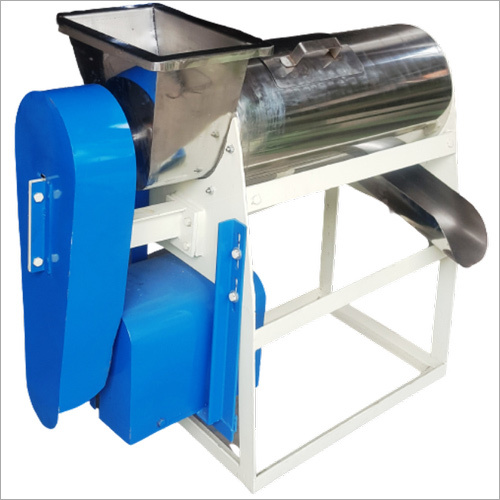
Sauce Making Machine
Price 445200 INR / Piece
Minimum Order Quantity : 1 Piece
Color : Other, Silver
General Use : Sauce, ketchup, puree preparation
Capacity : 100 to 500 kg/hr
Voltage : 220240 V
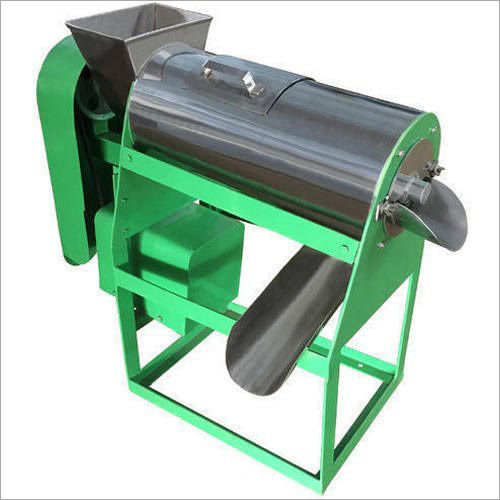
Tomato Pulp-Paste Making Machine
Price 48000 INR / Piece
Minimum Order Quantity : 1 Piece
Color : Other, Industrial Grey
General Use : Commercial Tomato Pulp & Paste Production
Capacity : 300 Kg/hr
Voltage : 220 V

PACKAGING SOLUTIONS (Processing & Packaging Division)
An ISO 9001:2008 Certified Company
An ISO 9001:2008 Certified Company
 pankaj@packagingsolutionindia.com
 Send Inquiry
Our Products
- Ketchup Processing Plant
- Mayonnaise Manufacturing Equipment
- Juice Processing Plant
- Tutti Frutti Plant
- Sauces Jam Processing Plant
- Juice & Pulp Extraction Plant
- Fruits and Vegetable Processing Plant
- Sterilization Equipment
- Tomato Processing Plant
- Cooking Kettles
- Canning Equipment
- Bottling Equipment
- Pickle Making Equipment
- Industrial Dryers


12/46, Sunrise Industrial Area, Site-Ii, Loni Road, Mohan Nagar,Ghaziabad - 201007, Uttar Pradesh, India

Mr Pankaj Sharma
(M.D )
Mobile :08045477641
 Send Inquiry
 Send SMS
 Call Me Free
Developed and Managed by Infocom Network Private Limited.
